workshop ii. @ Room 117, University of Zadar – New campus
Whose journal is it anyway? Workshop on journal ownership
Convened by Milica Sevkusic, Sofie Wennström, and Johan Rooryck
Current work on the Diamond Discovery Hub (DDH) at the European Diamond Capacity Hub has revealed that journal ownership is one of the most significant hurdles for journals to comply with the 6 operational criteria that determine admission to the DDH.
The criterion specifies that journals should be “community-owned”, and community ownership is defined as “The journal title must be owned by public or not-for-profit organisations (or parts thereof) whose mission includes performing or promoting research and scholarship. These include but are not limited to research performing organisations (RPOs), research funding organisations (RFOs), organisations connected to RPOs (university libraries, university presses, faculties, and departments), research institutes, and scholarly societies. The journal should explain its ownership status on its webpage”.
In many cases, journal editors and publishers have never given thought to ownership, because they see their contributions to the journal as community service and part of their tasks as scholars. This situation has led many Diamond journals to be taken over by commercial publishers with little or no pushback. A strong and resilient Diamond OA ecosystem needs to make sure that Diamond OA journals are legally owned so that predatory take-overs can be effectively resisted.
In addition, within the Diamond OA community, questions arise as to what ownership of a journal title really means when all of its contents is CC BY. Under that view, the journal is then just the thread that binds these articles together, and there is nothing to own. However, it can be argued that every journal has a bundle of intangible assets. These assets include the journal title, its ISSN, its aims and scope, its database of authors and reviewers, its archives, its governance and organisation, editorial and publishing policies and its social capital in the journal’s community. Together, these do represent a set of identifiable resources that can be owned by a legal entity.
In this workshop, we will invite a number of specialists to discuss their perspective on the issues of determining journal ownership, focusing on three aspects:
What are the practical difficulties encountered by a DDH Trusted Source to identify journal ownership?
What are practical solutions to handle journal ownership?
What mechanisms can help balance potential tensions between editorial independence and ownership?
How can we define what assets are “owned” when “journal ownership” is discussed?
Johan Rooryck currently is a co-coordinator of the European Diamond Capacity Hub at OPERAS alongside Pierre Mounier, and a PI on the EU-funded ALMASI project that aims to build a non-profit, Diamond Open Access (OA) ecosystem across Europe, Africa and Latin America. He has been involved in various Open Access organisations and projects, from cOAlition S to the EU-funded DIAMAS, CRAFT-OA, and PALOMERA projects. He is co-editor-in-chief of the Diamond OA journal Glossa: a journal of general linguistics, a journal that transitioned to Diamond OA in 2016 when its Editorial Team and Board, as well as its reader and author community, decided to abandon the Elsevier-owned journal Lingua to found Diamond OA Glossa. He is a member of the Academia Europaea, a doctor honoris causa of UiT – The Arctic University of Norway, and a visiting professor at Leiden University, where he held the chair of French linguistics from 1993 to 2020.
thursday, 1o September, 9:30 – 10:30
PARALLEL WORKSHOP SESSION
[Workshop I]
- Generative AI and Law: Copyright Challenges from Training Data to AI Outputs (Maja Bogataj Jančič)
[Workshop II]
- Whose journal is it anyway? Workshop on journal ownership (Milica Ševkušić, Sofie Wennström, and Johan Rooryck)
[Workshop III]
- Turning scientific journals into semantic knowledge systems using artificial intelligence (Domagoj Ivanuša and Mario Ivanuša)
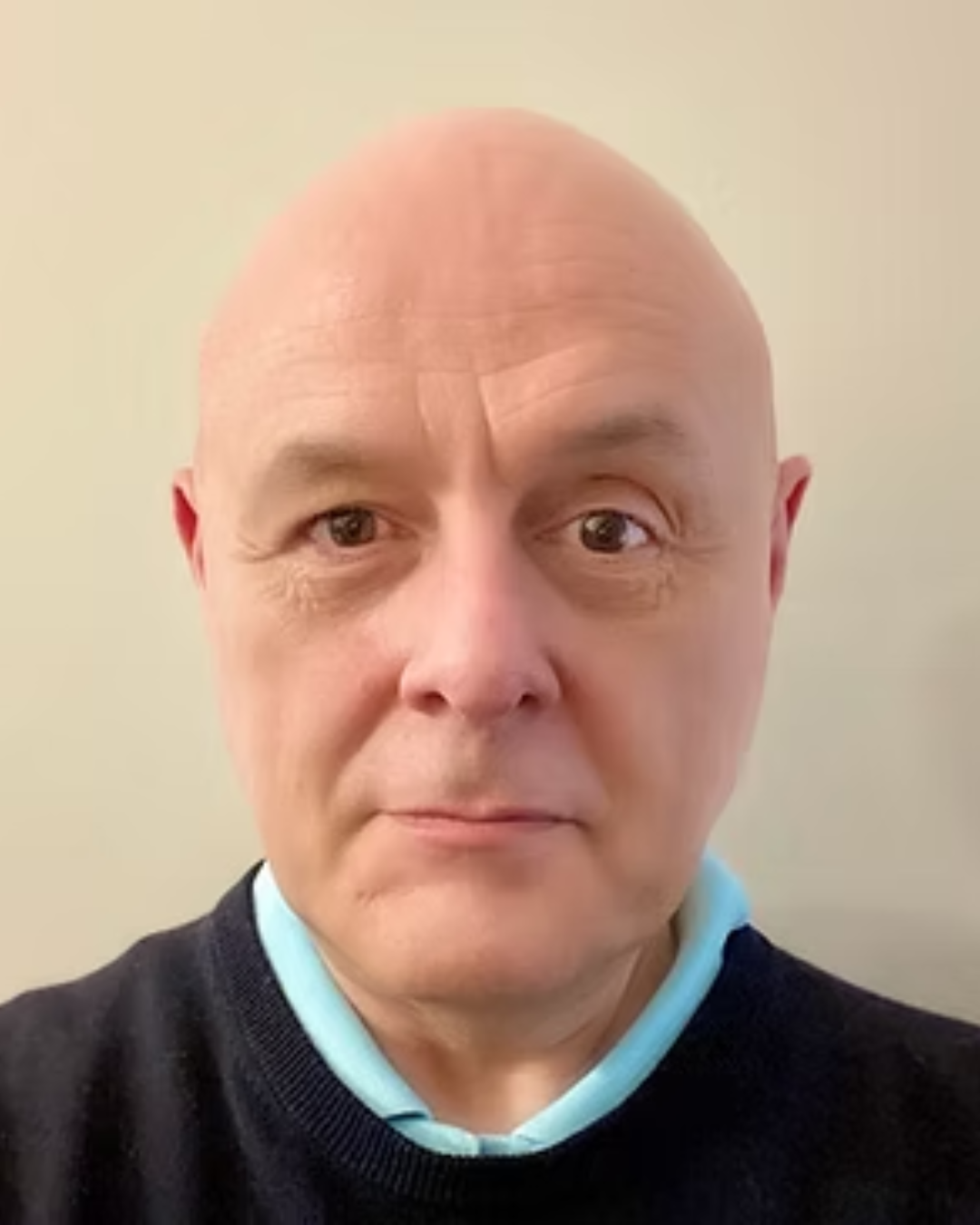
Johan Rooryck
OPERAS