POSTER PRESENTATION
Open access to master theses: Follow up of nine SEA-EU Alliance universities, 2019-2023
Danijel Gudelj [ST-OPEN, University of Split, Split, Croatia]
Ana Matijašević Renić [Split University Library, Split, Croatia]
Petra Zoranović [Split University Library, Split, Croatia]
Matko Marušić [ST-OPEN, University of Split, Split, Croatia]
Ana Marušić [Department of Research in Biomedicine and Health, University of Split School of Medicine, Split, Croatia]
This paper is a follow-up to our 2019 study in which we examined the availability of master’s theses in the repositories of nine European universities within the SEA–EU alliance (Gudelj et al., 2022). Our initial interest in this topic emerged from our work with Dabar, from which we extracted master’s theses needed for the open-access journal ST-OPEN. ST-OPEN is organized as an online open-access overlay interjournal that extracts most of its content from documents deposited in the national platform DABAR – Digital Academic Archives and Repositories (https://dabar.srce.hr/en/repositories).
Master’s theses are often an underrecognized part of scholarly output in higher education. They frequently include original empirical findings, theoretical developments, and methodological contributions that can significantly enrich scientific knowledge. However, they have historically been difficult to access, often confined to university libraries or restricted archival systems. This limited visibility stands in stark contrast to recent trends in science, where open science has become a key priority (Thibault et al., 2023).
We analyzed the public availability of master’s theses for nine SEA–EU universities located in European port cities in 2019 and 2023: Cádiz (Spain), Gdansk (Poland), Kiel (Germany), Malta (Malta), Naples (Italy), NORD (Bodø, Levanger, Norway), Split (Croatia), and Western Brittany (Brest, France). The 2019 data for the universities of Cádiz, Gdansk, Kiel, Malta, Split, and Western Brittany were taken from our previous analysis (Gudelj et al., 2022). The 2019 data for Algarve (Faro, Portimão, Portugal), Naples (Parthenope University, Italy), and NORD (Bodø, Levanger, Norway), as well as the 2023 data for all nine SEA–EU universities, were collected in 2025.
Data on master’s theses were collected from universities’ websites and verified through direct contacts with librarians at each institution. The number of enrolled students in 2019 and 2023 was obtained from universities’ websites or through administrative contacts.
We present descriptive analyses of the number of enrolled students and the access status of students’ master’s theses at individual universities and across scientific disciplines. Results are reported as frequencies and percentages for the two study years. Differences between access types were tested using the chi-square test with α = 0.05, using MedCalc v23.3.7 (MedCalc, Ostend, Belgium).
Based on access-status categories (open access, authorised access, institutional access, temporarily closed, and closed access), we found substantial variation across universities. This variation reflected national and institutional policy frameworks: universities with a legal mandate for open-access deposit (Split, Algarve) showed higher rates of open access, while those with voluntary deposit schemes (Brest, NORD) or selective criteria requiring deposit only of highest- graded theses (Cádiz, Malta) showed more limited openness. . Three universities where master’s theses are not publicly available (Gdansk, Kiel, Naples) were excluded from this analysis; none of these institutions has a regulation requiring deposit of master’s theses in institutional repositories.
Our follow-up study of the availability of master’s theses in the repositories of nine European universities from 2019 to 2023 indicates that there has been no major improvement in the openness of master’s theses. Moreover, the contribution of master’s theses available under open-access conditions appears to have remained similar or decreased at several universities in 2023 compared with 2019.
SEA–EU alliance; repository; master’s thesis; open access
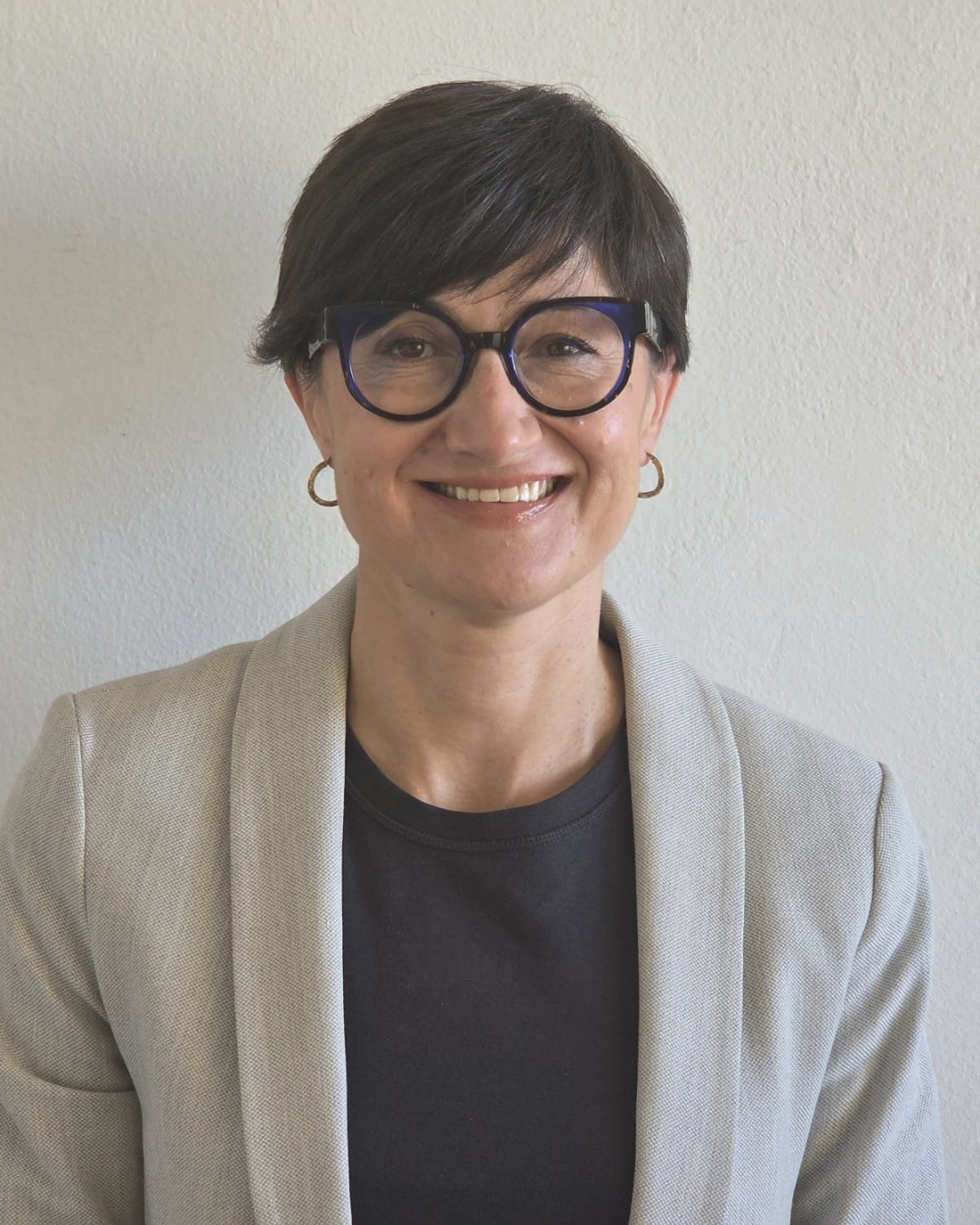
Ana Matijašević Renić is a librarian working in the central service for research and development at the University of Split. Her work focuses on research support services and scholarly communication, particularly in the areas of open science and electronic resources. She coordinates the institutional repositories for the University of Split’s departments and is actively involved in user education, including the design and delivery of information literacy training
Gudelj, D., Matošić, M., Poljak, L., Tomić, V., Marušić, M., & Marušić, A. (2023). Accessibility of master’s theses at SEA-EU Alliance universities. International Journal on Digital Libraries, 24, 229–241. https://doi.org/10.1007/s00799-022-00340-3.
Thibault, R. T., Amaral, O. B., Argolo, F., Bandrowski, A. E., Davidson, A. R., & Drude, N. I. (2023). Open Science 2.0: Towards a truly collaborative research ecosystem. PLoS Biology, 21(10), e3002362. https://doi.org/10.1371/journal.pbio.3002362
friday, 11 September, 13:40 – 14:50
SESSION 8
[sponsor presentation] → Paradigm Publishing Services
[poster session]
- Mapping Open Science in the Central and South-Eastern Europe (Maja Bogataj Jančić)
- Advancing Open Science In India Through Student-Led Initiative (Terrin Manjila, Merima Halilbegović, Ivan Flis and Ljerka Ostojić)
- Open access to master theses: Follow up of nine SEA-EU Alliance universities, 2019-2023 (Ana Matijašević Renić, Danijel Gudelj, Petra Zoranović, Matko Marušić and Ana Marušić)
- Exploring the Unknown Heritage of Moslavina: Students as Researchers and Contributors to Open Knowledge (Iva Galić)
- AI tools in student research practice: A longitudinal study on open digital tools and creativity development in secondary education (Zlatko Matijašević)
[panel discussion] → Measuring and monitoring in Open Science
Ana Matijašević Renić
Split University Library » Split, Croatia