short talk PRESENTATION
In Between Communities – The Role of FIDs for the Service Center Diamond Open Access (SeDOA)
Martin Wiegand [Max Weber Stiftung / SeDOA, Bonn, Germany]
One of the main goals for the German “Service Center Diamond Open Access” (SeDOA) (https://diamond-open-access.de) is to improve collaboration and exchange between scientific communities, researchers and other Diamond Open Access stakeholders. Therefore, the work package “networking services” focuses on community engagement on both national and international level, in order to strengthen and enhance the Diamond landscape. It is one of six work packages within the SeDOA consortium, which itself is composed of 15 partners across disciplines and infrastructures.
Due to its federal structures, Germany has a rather special heterogenic landscape of scientific communities and infrastructures, many of which doubling or overlapping each other. Thus, mapping, engaging, and coordinating these many different communities can be a challenging endeavour.
To achieve its goal of improving the Diamond OA community landscape nonetheless, SeDOA can rely on a mid-level community structure first established by the “Deutsche Forschungsgemeinschaft” (DFG) in 2014: The so called “Fachinformationsdienste” (FID). These discipline specific information services aim to support their communities with easily accessible literature and relevant information on their respective field of research.
The presentation first introduces SeDOA and the structure of the FIDs very briefly, to then discuss how SeDOA as a National Capacity Center of the European Diamond Capacity Hub can benefit from already existing mid-level structures to engage communities more effectively and with less effort.
As the over 40 FIDs are set up in between particular scientific communities on one side and national or international organisations on the other side, they function as an elemental link between different institutional levels. In addition, they have a deep understanding of their discipline, its specific demands and characteristics, and therefore can provide services and tools tailored to the needs of one particular community in a way that a national level institution like SeDOA cannot. The other way round the FIDs can benefit from SeDOAs strong expertise on Diamond Open Access, as one of their main purposes is to supply easy access to scientific literature for researchers and communities and support them in OA-publishing.
To establish a beneficial exchange between SeDOA and the FIDs the work package “networking services” has first made a mapping of all existing FIDs, gathering information on their OA-publication services, hosting institutions, points of contact etc. This data can already provide valuable hints on the diverse communities’ publication practices, that will be discussed in the presentation. Where certain FIDs don’t (yet) offer Open Access services to their communities at all, it can be assumed that OApublications currently don’t play a major role in that respective discipline. On the other hand, it becomes obvious which communities might benefit from additional support from SeDOA to establish Diamond Open Access structures within their field.
We will end the presentation with an outlook on future steps in terms of community engagement. The SeDOA team just recently started approaching the FIDs directly with the final aim to identify specific demands and establish a stronger connection to a vast variety of scientific communities in Germany. The information gathered this way, such as the FIDs respective disciplines, contact points and of course Open Access services, will help SeDOA to better support researchers and offer workshops and teachings according to their specific needs.
Diamond Open Access; Community Engagement; National Capacity Center
After completing his degree in History and German Language and Literature, Martin Wiegand started as an editor for scientific publications at Wallstein Verlag (Göttingen, Germany). He then held various positions at Herzog August Library (Wolfenbüttel, Germany) including head of project office, editor at a Diamond OA-Journal, and general OA-Officer, where he was part of the initial SeDOA project group. In 2026 he changed to Max Weber Stiftung (Bonn, Germany) as OA-Officer for SeDOA.
Thursday, 10 September, 15:25 – 17:10
SESSION 5 Building, governing and sustaining the infrastructures
[keynote speaker] → Laetitia Bracco
[short talks]
- After the architecture: Who governs the federation? (Elena Sokolova)
- OpenCitations as a community-based open scholarly infrastructure and its recent steps towards sustainability (Chiara Di Giambattista and Silvio Peroni)
- In Between Communities – The Role of FIDs for the Service Center Diamond Open Access (SeDOA) (Martin Wiegand)
- Shared Infrastructure as Community Governance: A PaaS-based Approach to FAIR Data Exchange in LUMEN (Paweł Marciniak)
[discussion]
[poster session]
- Open Research Data capacity building: lessons from Gdańsk University of Technology (Agnieszka Szymik)
- CoreTrustSeal certification of the Repository of the Faculty of Science, University of Zagreb: The first certified institutional repository in Croatia (Gordana Stubičan Ladešić and Dijana Sever)
- Building Skills for Open Science (Dejana Carić, Iva Vidović and Draženko Celjak)
- Building a Transnational Research Community in Central and Eastern European Life Sciences: The Contribution of the University of Zagreb School of Medicine to the Alliance4Life_BRIDGE Project (Tea Vukušić Rukavina, Lea Škorić, Filip Sedlić, Ana Borovečki, Srećko Gajović, Nada Čikeš, Božo Krušlin, Monika Ulamec, Željka Krsnik, Goran Šimić and Ivan Padjen)
- From Open Access to Open Science Ecosystems: A Bibliometric Analysis of Governance, Community, and Infrastructure Research in Scholarly Communication (Iva Kovačević Melinčević)
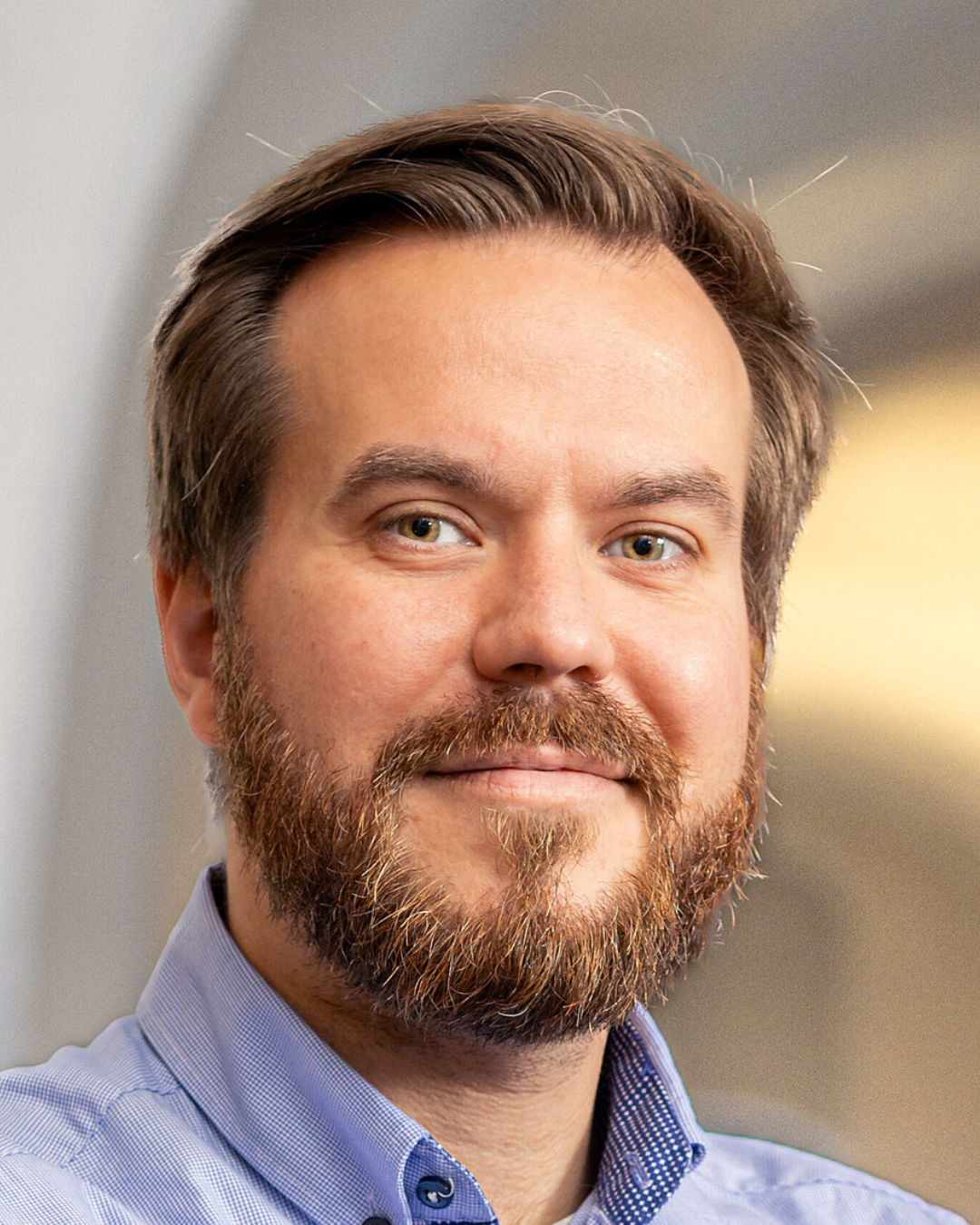
Martin Wiegand
Max Weber Stiftung / SeDOA » Bonn, Germany