short talk PRESENTATION
Navigating Openness: Exploring Perspectives from Social Sciences and Humanities
Dr. Maike Neufend [Open Research Office Berlin, Universitätsbibliothek, Freie Universität Berlin, Berlin, Germany]
Maaike Duine [Open Research Office Berlin, Universitätsbibliothek, Freie Universität Berlin, Berlin, Germany]
To contextualize open research, we aimed to develop discipline-specific indicators within our project “Open Science Magnifiers,” focusing on the Social Sciences and Humanities. However, after initially concentrating on outputs such as journal articles, book chapters, conference papers, blog posts, and open data, we encountered challenges due to a lack of available data sources, making the process more complex than anticipated. Although data sources are limited, we still observed a variety of open research practices that differ among researchers and research communities.
Inclusive, flexible and co-created indicators for open research monitoring purposes are essential to increase visibility of such practices, and by that enabling the sharing of best practices across communities. The Open Science Monitoring Principles (Bobrov et.al., 2025) state: ‘The long-term goal is to converge towards a core set of quantitative and qualitative indicators that facilitate comparability and collective learning.’ Without well-developed indicators, in which values and processes are not taken into account, many outputs and open research practices may be overlooked and go unrecognized. Rafols et al. (2024) additionally point out that open research processes, such as collaborative practices (including societal engagement), are not yet included in open research monitoring frameworks. In light of current efforts to reform research evaluation, there is an increasing risk of perpetuating the belief that all open research tools and practices are universally applicable across various research methodologies. Moreover, this presentation aims to critically examine both the ways of measuring and the assumption that indicators are scalable in the context of research assessment. The development of qualitative, value-based approaches to monitoring becomes more important to avoid introducing new inequalities into the academic system. Few studies introduce the concepts of open research case studies and narratives for monitoring open research uptake (Bezuidenhout et al. 2024; Pownall 2025).
In our project, we have initiated ‘Open Science Case Studies for the Social Sciences and Humanities’ to shift the focus from monitoring open research outputs to monitoring open research processes, and to contribute to the development of open research as a broad concept related to values. Guided by the project title “Open Science Magnifiers” and Bezuidenhout et al. (2024), we adopt the term “Open Science Case Studies,” while noting that, in our study, “Open Science” and “Open Research” are used interchangeably across SSH and STEM, consistent with the UNESCO (2021) definition. To identify and develop these Open Science Case Studies, we have conducted narrative interviews with 12 researchers from various fields within the Social Sciences and Humanities at German academic institutions. We carefully documented and coded conversations with researchers and reflected on their subjective narratives, blind spots and the complexities of openness. Conversations focused on the very concept of openness, practices of openness and its contextualization in the researcher’s professional biography. What is important to them, at what stage in their career and why? What is not shared openly and what are the underlying reasons?
The open research practices in SSH we identified span from sharing the researcher’s initial ideas to published results: collaboration, data sharing practices, preprint publishing, open peer review, and availability of research infrastructures, different publishing and communication formats. Personal motivation, workload and recognition were important topics of the conversations as well. In this presentation at the PUBMET2026 Conference, we will present and discuss the results of our qualitative method for monitoring open research practices in SSH. By presenting and discussing the framework and methodology of our approach and results, we also would like to contribute to other initiatives on identifying and cataloguing open research practices in SSH (Adams, et.al., 2026), and operationalising these for monitoring purposes. In supporting diverse and critical perspectives on describing open research practices, we aim to contribute to developing more inclusive monitoring frameworks that take into account discipline-specific perspectives. The PUBMET2026 Conference would offer a great opportunity for us to discuss and further refine this approach within the professional community.
Open Research; Open Science; Open Science Indicators; Open Science Monitoring; Social Sciences and Humanities
Adams, J., Barnes, M., Moore, S., Pinfield, S., & Soni, S. (2026). Openness in the arts, humanities and social sciences: Documenting open research practices beyond STEM (A MORPHSS Project Report) (S. 51). MORPHSS Project. https://doi.org/10.17613/h10rz-qk035
Bobrov, E., Bracco, L., Dacos, M., Fressengeas, N., Hrynaszkiewicz, I., Iarkaeva, A., Peršić, A., Proudman, V., Romary, L., & Sabo, R. (2025). The Principles of Open Science Monitoring. Open Science Monitoring Initiative. https://doi.org/10.5281/zenodo.19351969
Bezuidenhout, L., Castaño, P., Leonelli, S., Rafols, I., & Vargiu, A. (2024). Introducing Case Studies in Monitoring Open Science. Zenodo. https://doi.org/10.5281/zenodo.14174180
Rafols, I., Meijer, I. & Molas-Gallart J. (2024). Monitoring Open Science as transformative change: Towards a systemic framework [version 1; peer review: 2 approved]. F1000Research 13: 320. https://doi.org/10.12688/f1000research.148290.1
Pownall, M. (2025). Bridging qualitative methods and open research. Nat Rev Psychol 4, 556–557. https://doi.org/10.1038/s44159-025-00477-3
Dr. Maike Neufend is a sociologist specializing in knowledge and culture. With degrees in sociology, Islamic studies, and philosophy from Hamburg and Damascus, she earned her PhD in sociology in 2021. Her research examines the social dimensions of knowledge, focusing on intellectual, aesthetic, and scientific practices. Since 2020, Maike has worked at the Open Research Office, Berlin’s state coordination office, and has led the office since 2025. She has conducted extensive research on open research policy making and is herself coordinating Berlin’s open research strategy. She is particularly interested in various practices of scholarly communication, including radical and decolonial approaches to open research. She is a colead of the BUA Open Science Magnifiers project.
Thursday, 10 September, 13:35 – 14:55
SESSION 4 Perspectives on Openness
[short talks]
- The Journal Flipping as a scientific community experience: convergence, disagreements and conflicts (Juliette Le Marquer, Zoé Sinsou and Chérifa Boukacem-Zeghmouri)
- Navigating Openness: Exploring Perspectives from Social Sciences and Humanities (Maike Neufend and Maaike Duine)
- Being Seen or Used? Open Access Models and Discoverability in Translating Science into Patents (Abdelghani Maddi, Chongjun Xi, Xiaoting Chen, Isabelle Dorsch and Marc-André Simard)
- Delisted: Verfassungsblog and the Politics of Inclusion in Open Access Infrastructures (Elena Di Rosa)
[discussion]
[sponsor presentation] → MDPI
[poster session]
- The Role of Centre for Electronic Publishing in the Academic Community of the University of Rijeka (Lea Lazzarich and Sanja Kosić)
- An insight into the diamond open access encyclopedic collections of the Miroslav Krleža Institute of Lexicography (Nataša Jermen, Irina Starčević Stančić and Bea Hrup)
- Libraries as citizen science initiators and hubs: The case of National and University Library in Zagreb (Sanja Jurković)
Check out the full » programme «
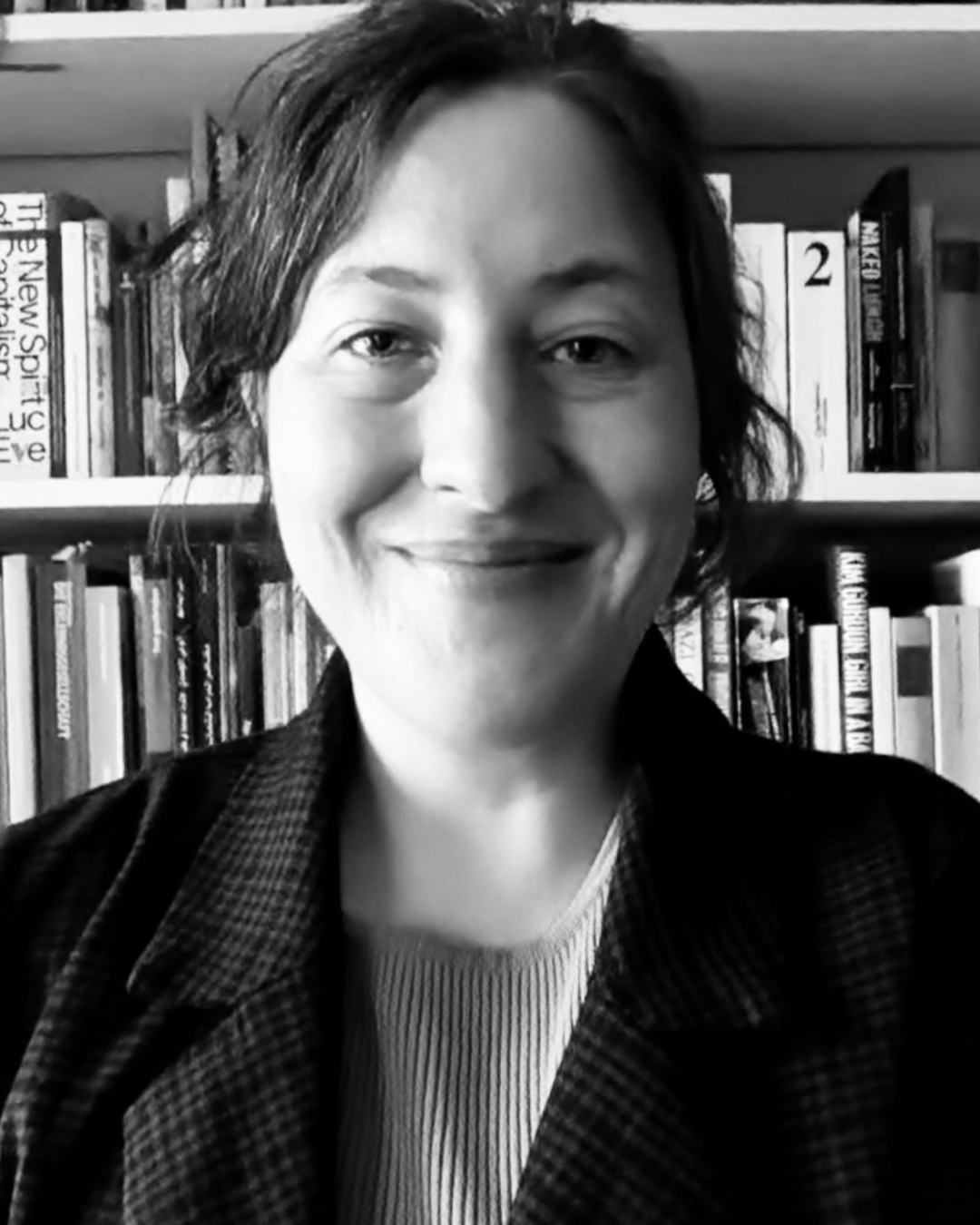
Maike Neufend
Open Research Office Berlin, Universitätsbibliothek, Freie Universität Berlin » Berlin, Germany