SHORT TALK PRESENTATION
The Journal Flipping as a scientific community experience: convergence, disagreements and conflicts
Juliette le Marquer [Université Lyon 1, Lyon, France]
Zoé Sinsou [Université Grenoble Alpes, Grenoble, France]
Chérifa Boukacem-Zeghmouri [Université Lyon 1, Lyon, France]
Of the phenomena shedding light on the place and role of scientific communities in the shift towards open access publishing, ‘flipping’ is certainly one of the most interesting to observe. The success of a journal’s transition to Diamond Open Access (OA) depends not only on the economic and infrastructural conditions secured by the editor-in-chief and his editorial board, but also on the community’s support for the decision and the transition (Sinsou, and al., 2026). Journals that have successfully flipped are those whose communities have embraced, supported and followed through on the editor-in-chief’s decision, by the shift of the community’s voluntary activities (reading, citing, submitting and peer reviewing) (Adema, Moore, 2024; Luca and al., 2026) from the “deserted” journal to the new Diamond title.
This transition is intended to secure the community’s freedom to publish high-quality work in line with its own aims and objectives. It typically involves the entire board resigning en masse to establish a new Diamond OA journal, relying on the community — including authors, peer reviewers, board members and, more broadly, the wider community in their field — to unanimously support their move. However, flipping sometimes fails because the community that initially rallied becomes divided. While some board members remain with the “deserted” journal — or even become its new editors-in-chief — readers and authors of the new journal do not follow. Their loyalty is kept to the historic journal, which still retains the symbolic capital (Moore, Wigdorowitz, 2025).
Although flipping is well documented in the scientific literature in terms of its scale and impact (Solomon and al., 2016), its effects on its own communities have received very little attention. There is also limited knowledge about the communities behind the trajectories of flipping journals, the leading scholars driving these transitions and the loyalty of the journals’ contributors. While public statements and press releases provide insights into the arguments that informed the decision to flip, they do not shed light on the robustness and sustainability of the community’s motivation to see this decision through. This is why we aim to emphasize in this proposal the relevance of flipping experience and process for understanding scientific communities’ role and impact. Therefore, our proposal addresses the following research questions: how do scientific communities navigate the experience of their journals flipping? What factors determine community cohesion, or indeed division?
Our methodology relies on a qualitative approach involving 21 semi-directed interviews with editors-in-chief of international scholarly journals from various fields (STEM and SSH), organized between February and April 2026. Our grid interview enabled us to explore the mechanisms and impact of the flipping experience, as well as the consensus and dissension within the journal community, the choice of infrastructure by the journals, and the reputation and legitimation of the new journals. The following table outlines the data corpus.
| Infrastructures | Number | Fields | Status |
| Open Library of Humanities (OLH) – UK | 8 | SSH | Mixed (in transition and flipped) |
| Epi-Sciences – France | 6 | STEM | Mixed (in transition and flipped) |
| OpenEdition – France | 1 | SSH | Flipped |
| University press – MIT Press, University of Calgary Journal Hosting | 3 | Interdisciplinary | Mostly flipped |
| Centre Mersenne – France | 1 | STEM | Flipped |
| Berghahn Journals – UK/ USA | 1 | SSH | Flipped |
| Érudit – Quebec | 1 | SSH | Flipped |
Our results highlight that the conditions for the success of journal flipping mainly rely on the intricate relationship between the editor-in-chief (his authority and legitimacy) and his journal community. Building on this relationship, the editor-in-chief, as a leader and as a gatekeeper, can make the journal identity ‘portable’ (Anderson, 2023). This portability encompasses the entire process: technical (hosting infrastructures), economic (funds support) and social (community practices shift). They endorse the whole transition by playing a leading role in making the flipping feasible and sustainable (Laakso and al, 2016). Many factors influence community cohesion or division, including genuine commitment to open access, attachment to reputational metrics (mainly Impact Factor), generational differences (between early-career and senior researchers) and community attitudes towards perceived unfair behavior or injustice from publishers (Beigel, 2025). In this case, flipping can be considered as a trial of loyalties and the key to its success or failure.
The study also reveals that the flipping can be divided into two stages: 1/ a process of loss and dispossession, and 2/ a process of reconstruction. The latter can be seen as evidence of the governance of knowledge production by the journal’s scientific communities. This restores the role and status of the editor-in-chief and reaffirms the value of editorial labour. It also reclaims community control over the process. This allows us to conclude that the success of a journal’s transition to the Diamond model is primarily a matter of how scientific communities govern their own research production and dissemination.
Diamond; Open Access; Scientific community; Journals; Flipping
Adema, J., & Moore, S. A. (2024). Just One Day of Unstructured Autonomous Time Samuel A. Moore Supporting Editorial Labour for Ethical Publishing within the University. New Formations, 110 (110–111), 8–27. https://doi.org/10.3898/NewF:110-111.01.2024
Anderson, R. (2023, May 8). Is the Essence of a Journal Portable? Scholarly Kitchen. https://scholarlykitchen.sspnet.org/2023/05/08/is-the-essence-of-a-journal-portable/
Beigel, F. (2025). The transformative relation between publishers and editors: Research quality and academic autonomy at stake. Quantitative Science Studies, 6, 154–170. https://doi.org/10.1162/qss_a_00343
Laakso, M., Solomon, D. & Björk, B.-C. (2016), How subscription-based scholarly journals can convert to open access: A review of approaches. Learned Publishing, 29: 259-269. https://doi.org/10.1002/leap.1056
Luca, E. J., Wakeling, S., & Jamali, H. R. (2026). Recognition, Workload and Sustainability: Perspectives of Australian Journal Editors. Learned Publishing, 39(2), e2041. https://doi.org/10.1002/leap.2041
Moore, S., & Wigdorowitz, M. (2025). “I just very much love the journal”: Understanding the community-led publishing landscape at the University of Cambridge. F1000Research, 14,. https://doi.org/10.12688/f1000research.161163.2
Sinsou, Z., Boukacem-Zegmouri, C., & Le Marquer, J. (2026). Transitions et discontinuités des revues scientifiques. Quelle mémoire dans “l’ordre du discours” ? Numérisation Des Savoirs Scientifiques Au Prisme Des Pratiques de Recherche. Mémoires, usages et enjeux critiques (conférence presentation), Villeneuve d’Ascq.
Solomon, D. J., Laakso, M., & Björk, B.-C. (2016). Converting Scholarly Journals to Open Access: A Review of Approaches and Experiences. http://nrs.harvard.edu/urn-3:HUL.InstRepos:27803834
This work is supported by the French National Research Agency (ANR) through the project OPENIT – Ouvrir les Publications pour une Edition Nouvelle, Inclusive et Transparente (ANR-24-RESO-0001). OPENIT, led by Abdelghani MADDI (CNRS), analyses the dynamics of the scientific publishing market and the interdependencies among its stakeholders, including research institutions, public authorities, publishers, and the scientific community. More information here: https://www.gemass.fr/contract/openit/
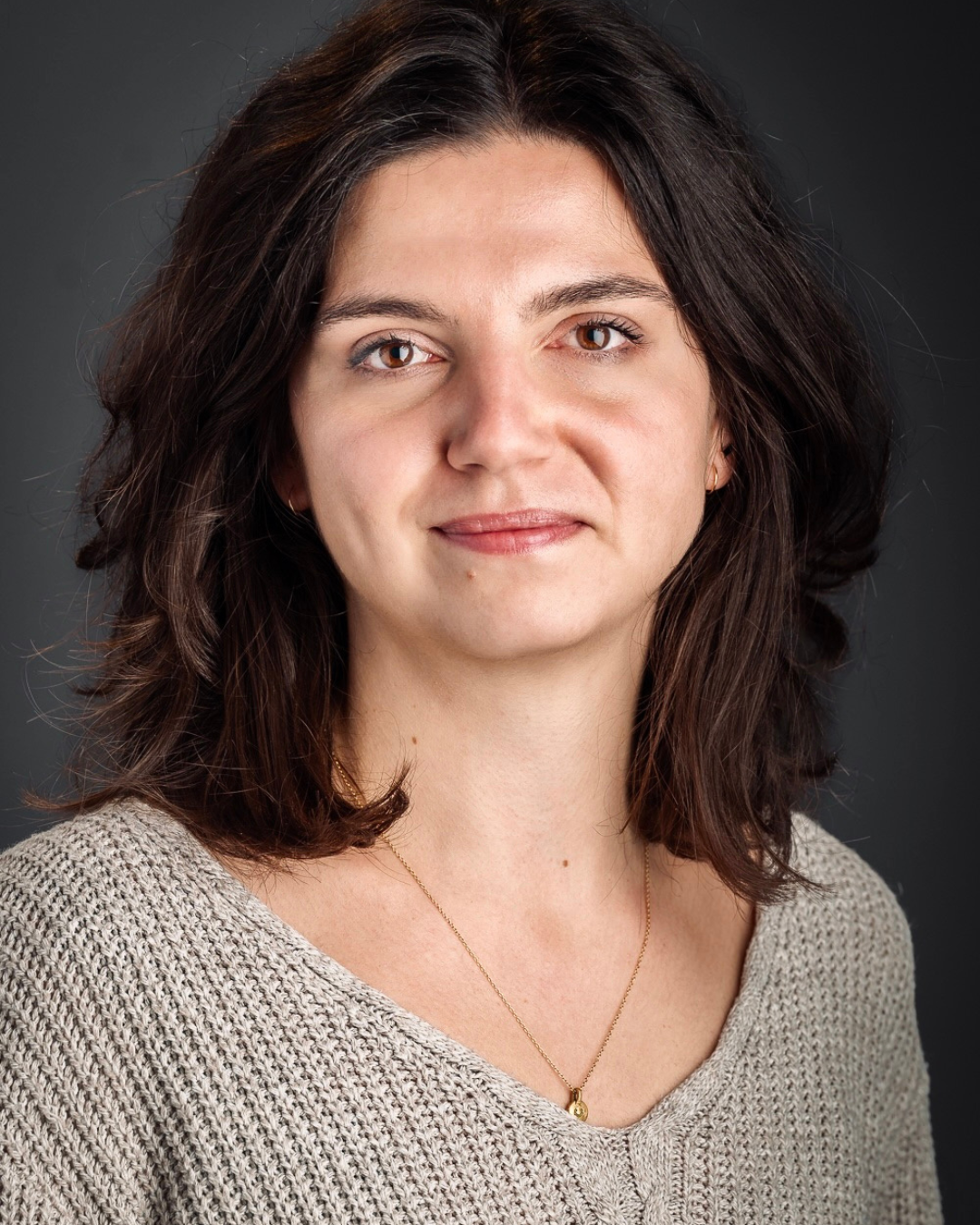
Juliette Le Marquer is a member of the Lyon Research Team in Information and Communication (ELICO 4147) at Université Lyon 1 (Department of Computer Science). She is currently involved the ANR project Open It as a postdoctorate and holds a PhD in Information and Communication Sciences. Her research focuses primarily on mediation practices and the role of communities in the dissemination of both scientific and general knowledge in the heritage preservation of memory.
Thursday, 10 September, 13:35 – 14:55
SESSION 4 Perspectives on Openness
[short talks]
- The Journal Flipping as a scientific community experience: convergence, disagreements and conflicts (Juliette Le Marquer, Zoé Sinsou and Chérifa Boukacem-Zeghmouri)
- Navigating Openness: Exploring Perspectives from Social Sciences and Humanities (Maike Neufend and Maaike Duine)
- Being Seen or Used? Open Access Models and Discoverability in Translating Science into Patents (Abdelghani Maddi, Chongjun Xi, Xiaoting Chen, Isabelle Dorsch and Marc-André Simard)
- Delisted: Verfassungsblog and the Politics of Inclusion in Open Access Infrastructures (Elena Di Rosa)
[discussion]
[sponsor presentation] → MDPI
[poster session]
- The Role of Centre for Electronic Publishing in the Academic Community of the University of Rijeka (Lea Lazzarich and Sanja Kosić)
- An insight into the diamond open access encyclopedic collections of the Miroslav Krleža Institute of Lexicography (Nataša Jermen, Irina Starčević Stančić and Bea Hrup)
- Libraries as citizen science initiators and hubs: The case of National and University Library in Zagreb (Sanja Jurković)
Check out the full » programme «
Juliette le Marquer
Université Lyon 1 » Lyon, France