POSTER PRESENTATION
Rethinking Access: Communication Challenges in Opening Theatre Archives
Zlatko Vidačković [Croatian National Theatre, Archive, Zagreb, Croatia]
The growing emphasis on opening cultural heritage through digitisation has significantly increased the formal availability of performing arts archives. At the same time, this development raises a central question: how is access translated into communication? This paper examines the communication challenges that emerge when theatre archives become digitally accessible but remain limited in terms of visibility, usability, and integration into scholarly communication and public use.
The paper departs from the assumption that access is not a binary condition but a structured and mediated process. The availability of digitised materials does not automatically ensure their participation in knowledge production. In many cases, digital archives remain underdeveloped in terms of communication due to limited discoverability, inconsistent metadata practices, and restricted conditions of reuse. As a result, they may create an appearance of openness while maintaining constrained regimes of visibility and access in practice.
The analysis approaches theatre archives as communication environments rather than neutral repositories. Instead of focusing on digitisation as a technical process, the paper examines how archival systems organise information, enable or limit user interaction, and shape the interpretation of cultural heritage. Particular attention is given to the role of searchability, metadata structuring, and full-text accessibility in transforming archival materials into communicatively usable resources.
The study is based on a qualitative, communication-oriented analysis of theatre archival practices, informed by the Croatian context. Rather than presenting a single institutional model, the paper uses this context to identify broader structural patterns that characterise access to performing arts heritage. These include fragmentation of collections across institutions, lack of integration between archival systems, and the absence of coherent communication frameworks that would support effective use of digitised materials.
From a communication science perspective, access must be understood as a function of system design, information organisation, and user-oriented mediation. In this sense, digital archives operate as knowledge infrastructures that shape the circulation, interpretation, and reuse of cultural content. Their communicative capacity depends not only on technological solutions but on the alignment between institutional practices, metadata standards, and user needs.
This argument is situated within recent discussions on Open Science, which emphasise accessibility, transparency, and reuse as core principles of scholarly communication. However, as highlighted in contemporary policy frameworks (UNESCO, 2021; European Commission, 2023), the implementation of these principles depends on the development of infrastructures that support meaningful access rather than mere availability. The paper extends this perspective by demonstrating that, in the context of theatre heritage, communication remains a critical but often underdeveloped dimension of openness.
By reframing access as a communication problem, the paper contributes to the understanding of digital cultural heritage within scholarly communication. It argues that opening theatre archives requires not only digitisation, but the development of communication structures that enable discoverability, interpretation, and reuse across academic and public communities.
access; communication; cultural heritage; digital archives; scholarly communication
Borgman, C. L. (2015). Big data, little data, no data: Scholarship in the networked world. MIT Press.
cOAlition S. (2021). Plan S: Principles and implementation. https://www.coalition-s.org
Edwards, P. N., Jackson, S. J., Bowker, G. C., & Knobel, C. P. (2013). Knowledge
infrastructures: Intellectual frameworks and research challenges. University of Michigan. http://hdl.handle.net/2027.42/97784
European Commission. (2023). Guidelines on FAIR data management in Horizon Europe. European Commission.
UNESCO. (2021). UNESCO recommendation on Open Science. UNESCO Publishing. https://doi.org/10.54677/MNMH8546
Born in 1972 in Šibenik. Holds an MA in Journalism (Faculty of Political Science, University of Zagreb) and a PhD in Information and Communication Sciences (Faculty of Humanities and Social Sciences, University of Zagreb). and currently works as editor of theatre publications and archivist at the Croatian National Theatre in Zagreb.
Since 1996, worked in non-governmental organisations (JEF, NSMH, KK, MET), as a journalist (Jutarnji list, Globus, Vijenac, Zagreb moj grad), film critic and festival reporter (Hej.hr, IQ, Vjesnik, T-portal, Net.hr, Slobodna Dalmacija, Forum), columnist and commentator (Vjesnik), editor of journals (Vijenac, Hrvatsko glumište), radio programmes (Igra snova, Croatian Catholic
Radio), and e-publications (Kulisa.eu, Filmovi.hr, Kulturauzagrebu.hr).
Currently an assistant professor, with teaching experience across 20 courses at the Academy of Dramatic Art, Catholic University of Croatia, VERN University, and University North, including guest lectures in South Korea and Spain. Worked as artistic director of the Metropolis cinema at the Museum of Contemporary Art in Zagreb, as well as of the European Film Festival and the Pula Film Festival. Served as member of international film critics’ juries at festivals in Cannes, Venice, Berlin, and San Francisco. Editor of 10 books and 2 conference proceedings, organiser of 2 scientific conferences, and author of 3 books and 25 scientific papers.
Thursday, 10 September, 13:35 – 14:55
SESSION 4 Perspectives on Openness
[short talks]
- The Journal Flipping as a scientific community experience: convergence, disagreements and conflicts (Juliette Le Marquer, Zoé Sinsou and Chérifa Boukacem-Zeghmouri)
- Navigating Openness: Exploring Perspectives from Social Sciences and Humanities (Maike Neufend and Maaike Duine)
- Being Seen or Used? Open Access Models and Discoverability in Translating Science into Patents (Abdelghani Maddi, Chongjun Xi, Xiaoting Chen, Isabelle Dorsch and Marc-André Simard)
- Delisted: Verfassungsblog and the Politics of Inclusion in Open Access Infrastructures (Elena Di Rosa)
[discussion]
[sponsor presentation] → MDPI
[poster session]
- The Role of Centre for Electronic Publishing in the Academic Community of the University of Rijeka (Lea Lazzarich and Sanja Kosić)
- An insight into the diamond open access encyclopedic collections of the Miroslav Krleža Institute of Lexicography (Nataša Jermen, Irina Starčević Stančić and Bea Hrup)
- Libraries as citizen science initiators and hubs: The case of National and University Library in Zagreb (Sanja Jurković)
- Rethinking Access: Communication Challenges in Opening Theatre Archives (Zlatko Vidačković)
- AI tools in student research practice: A longitudinal study on open digital tools and creativity development in secondary education (Zlatko Matijašević)
Check out the full » programme «
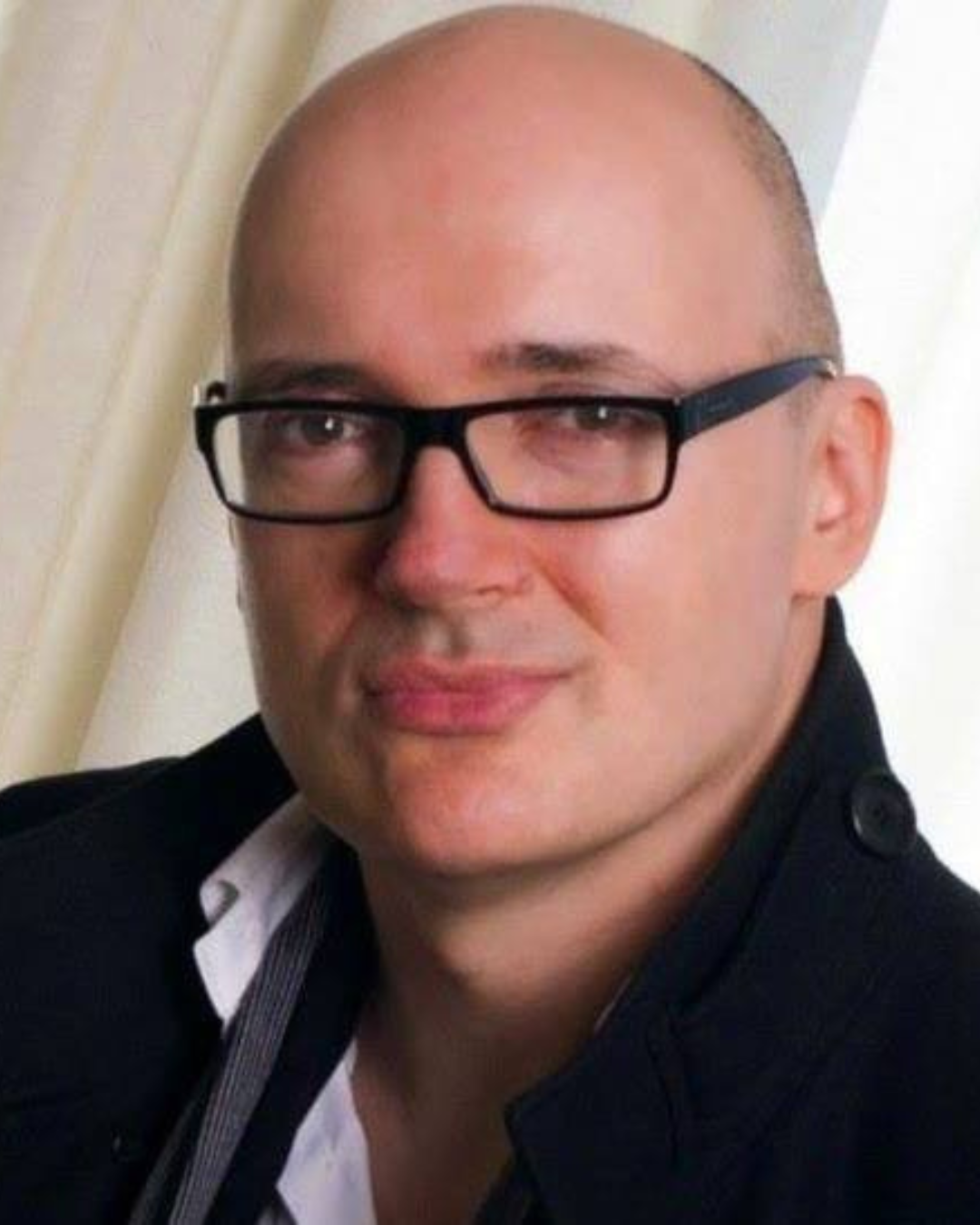
Zlatko Vidačković
Croatian National Theatre » Zagreb, Croatia