short talk PRESENTATION
When Citation Becomes Weaponized: Propaganda Triggers and the Crisis of Integrity in Scholarly Publishing
Ganna Kharlamova [Taras Shevchenko National Univ of Kyiv. Kyiv, Ukraine]
Andriy Stavytskyy [Taras Shevchenko National Univ of Kyiv. Kyiv, Ukraine]
Mariia Naumova [Taras Shevchenko National Univ of Kyiv. Kyiv, Ukraine]
Carl Taswell [Brain Health Alliance Virtual Institute Ladera Ranch, California, USA]
Scholarly publishing faces a growing crisis that extends beyond individual academic misconduct to include the deliberate weaponization of citations, the erosion of research integrity, and the spread of propaganda-like dynamics within peer-reviewed literature. To investigate these systemic threats, this study applies a triangular analytical framework. We systematically examine: (1) alternative models for intellectual credit, (2) conditions for preserving publishing integrity, and (3) the identification of structural propaganda triggers within scientific communication ecosystems.
The primary objective of this research is to determine how predatory citational practices operate, why current commercial publishing models fail to prevent them, and what practical infrastructure can safeguard vulnerable scholarly communities.
We first analyze community-based attribution alternatives—such as transparent provenance chains, version-controlled lineage tools, and open peer commentary—designed to mitigate metrics manipulation, including citation cartels and strategic ghosting (the deliberate omission of prior work). These alternatives align with responsible research assessment frameworks like the DREAM Principles and FAIR Metrics.
However, a rigorous open science approach requires acknowledging the structural barriers of these alternatives. Transitioning to non-profit, fee-free, community-based models (such as Diamond Open Access) introduces significant operational obstacles:
- An intensified, unsustainable strain on voluntary peer-reviewers;
- Strong resistance from traditional institutional evaluation regimes that remain dependent on classic impact factors;
- Profound vulnerabilities regarding long-term financial and organizational sustainability without commercial backing.
Furthermore, structural power asymmetries often persist, meaning that without explicit protections, marginalized or non-dominant scholarly voices remain excluded from mainstream citation networks and editorial boards.
Our analysis models how propaganda triggers operate when high-profile venues consolidate biased narratives. This dynamic occurs when a dominant publication marginalizes prior work through strategic omission rather than empirical refutation. Institutional inertia then blocks corrections, while editorial gatekeeping and citation exclusion effectively deny platforms to dissenting researchers.
The Ukrainian scholarly publishing ecosystem serves as a rapid, paradigmatic case example of these vulnerabilities. Drawing on ongoing research at Taras Shevchenko National University of Kyiv (Project No. 26GF013-02), our review of local publishing practices reveals that integrity deficits are often structural outcomes of systemic resource scarcity. Operating under wartime duress, constrained state funding, and an evaluative framework that pressures authors toward commercial journals, Ukrainian university presses demonstrate that technical harmonization (such as DOI or DOAJ indexing) is insufficient. True integration into the European Research Area requires a deeper renegotiation of who governs knowledge attribution and how the scholarly record is protected under political and financial pressures.
Ultimately, this talk presents a practical operational architecture for community-based governance. To safeguard regional publishing ecosystems from external capture and citation distortion, we recommend:
- Reforming institutional credit mechanisms to lower the monopoly of traditional citation metrics.
- Embedding automated integrity-protective protocols into daily editorial workflows.
- Deploying community-governed, decentralized repository networks and open peer-review workflows managed by non-profit academic coalitions to ensure long-term ecosystem resilience.
attribution; citation practices; open science governance; propaganda dynamics; scholarly integrity
Bedyukh, O., Hartman, Y., Danylchenko-Cherniak, O., Dunayevska, O., Zhenchenko, M., Izarova, I., Naumova, M., Rohozha, M., Stavytskyi, A., & Kharlamova, H. (2025). Ecosystem of Ukrainian scientific publications: Harmonisation of editorial practices with international standards. Organisational, legal and economic challenges for publications in scholarly publishing ecosystem. Kyiv University Publishing and Printing Centre.
Committee on Publication Ethics. (2025). Systematic manipulation of the publication process. COPE. https://publicationethics.org/guidance/flowchart/systematic-manipulation-publication-process
Craig, A., Ambati, A., Dutta, S., Kowshik, P., Nori, S., Taswell, S. K., Wu, Q., & Taswell, C. (2019). DREAM Principles and FAIR Metrics from the PORTAL-DOORS Project for the Semantic Web. In Proceedings of the 11th Annual IEEE International Conference on Electronics, Computers and Artificial Intelligence (ECAI) (pp. 1–6). IEEE. https://doi.org/10.1109/ECAI46879.2019.9042003
Hicks, D., Wouters, P., Waltman, L., de Rijcke, S., & Rafols, I. (2015). Bibliometrics: The Leiden Manifesto for research metrics. Nature, 520(7548), 429–431. https://doi.org/10.1038/520429a
Taswell, C. (2024). Unfairness by the FAIR Principles Promoters: A case study on the absence of accountability for integrity in research publishing. In T. A. Oliveira & M. T. Hebebci (Eds.), Current scholarly studies in technology and education 2024 (pp. 298–325). ISRES Publishing.
Taswell, C. (2025). Unfairness by the FAIR Principles Promoters: Falsifying the historical record of scientific reports in knowledge engineering versus maintaining standards for objective truth in publicly funded research. In Proceedings of the ISRES/ARSTE International Conference on Advances in Technology, Education and Science (ICATES). ISRES Publishing.
Teixeira da Silva, J. A., Vickers, N., & Nazarovets, S. (2024). From citation metrics to citation ethics: Critical examination of a highly-cited 2017 moth pheromone paper. Scientometrics, 129, 233–245. https://doi.org/10.1007/s11192-023-04855-7
Tennant, J. P., Crane, H., Crick, T., Davila, J., Enkhbayar, A., Havemann, J., Kramer, B., Martin, R., Masuzzo, P., Nobes, A., Rice, C., Rivera-López, B., Ross-Hellauer, T., Sattler, S., Thacker, P., & Vanholsbeeck, M. (2019). Ten hot topics around scholarly publishing. Publications, 7(2), Article 34. https://doi.org/10.3390/publications7020034
This abstract submission has been prepared as part of the research project 2023.03/0192 “Theoretical Foundations for Harmonising the Editorial Practices of Ukrainian Scientific Publications with International Standards for Ukraine’s Competitive Integration into the European Open Science Area”, under grant support from the National Research Fund of Ukraine (NRFU) and collaboration with BHAVI.
Dr. Ganna Kharlamova (Dr. Habil.) is a Full Professor in the Department of Economic Cybernetics at Taras Shevchenko National University of Kyiv, Ukraine. She served as the Director of the Coordination Center for the publication of scientific journals “Bulletin of Taras Shevchenko National University of Kyiv” (2024-2025) and is the Deputy Head of the Ukrainian Regional Chapter of the European Association of Science Editors (EASE) (2024), now is the member of EASE. She is a member of the SUPRR initiative. Currently, she is the Project Leader for the NRFU research project No. 26GF013-02, “Theoretical Foundations for Harmonising the Editorial Practices of Ukrainian Scientific Publications with International Standards for Ukraine’s Competitive Integration into the European Open Science Area” (contract No. 132.03/0192). Dr. Kharlamova focuses on economic modeling, Open Science practices, and academic publishing infrastructure, with over 300 publications, including 70+ in Scopus and Web of Science.
Thursday, 10 September, 11:00-12:35
SESSION 3 Supporting Integrity in Scholarly Publishing
[keynote speaker] → Sonja Bjelobaba
[short talks]
- When Citation Becomes Weaponized: Propaganda Triggers and the Crisis of Integrity in Scholarly Publishing (Ganna Kharlamova, Andriy Stavytskyy, Mariia Naumova and Carl Taswell)
- Opportunities for the editorial community to leverage scholarly metadata for increased integrity and discoverability (Madhura Amdekar)
[discussion]
[sponsor presentation] → Elsevier
[poster session]
- Thinking in Ecosystems for OA Book Publishing: Multilinguality, AI Assistance, and Collaboration (Szilvia Maróthy)
- Sense of Community, Power, and Scholarly Outputs: Insights from the Researcher Mental Health Observatory STAIRCASE Survey (Ana Slavec)
- When Openness Isn’t Enough: Case Study on Autism Framing in Croatian Scientific Discourse (Roberta Bajčić, Ljerka Ostojić and Miguel Núñez de Prado Gordillo)
- AI in Scientific Publishing: Support or Subversion? (Radovan Vrana)
- International Collaboration and Language Preservation: Case Study of an Agricultural Journal (Zvonimir Prpić)
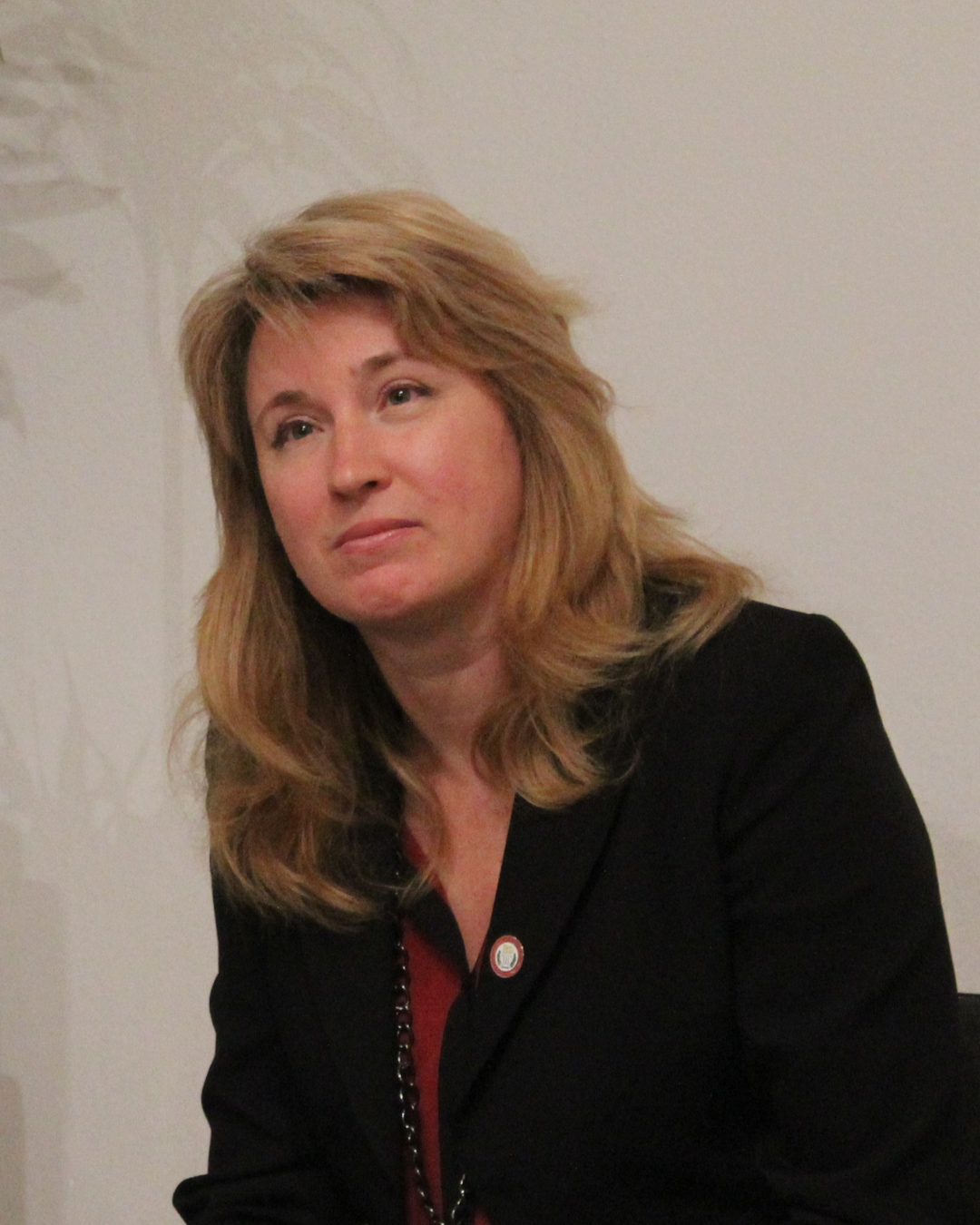
Ganna Kharlamova
Taras Shevchenko National Univ of Kyiv » Kyiv, Ukraine