POSTER PRESENTATION
Sense of community, power, and Scholarly Outputs: Insights from the Researcher Mental Health Observatory STAIRCASE Survey
Ana Slavec [University of Primorska, Faculty of mathematics, natural sciences and information technologies, Koper, Slovenia]
Concerns about researcher mental health are increasingly recognised as closely linked to how research systems are formed and governed, yet these issues are often discussed separately from scholarly communication, inclusion, diversity, and open science practices. Academic communities are not neutral spaces: they are shaped by norms, evaluation practices, and power relations that influence who belongs, who advances, and whose work is valued. This paper uses data from the Researcher Mental Health Observatory STAIRCASE Survey (Lasser et al. 2025; Lasser et al. 2026) to explore how researchers’ sense of community and experiences of power differences shape their positions within academic communities, and how these dynamics relate to research outputs across different scientific disciplines.
The data for the STAIRCASE Survey was collected with an online questionnaire between September 2023 and August 2023, and the sample comprises 4,296 researchers from various countries, primarily in Europe. It is a cross-sectional non-probability survey, but it includes researchers at different career stages and from diverse disciplinary contexts (from natural sciences and technology to social sciences and humanities), allowing for comparative perspectives.
STAIRCASE data captures a broad range of variables related to academic working conditions, including feelings of belonging and social support, perceptions of hierarchy and power asymmetries, research and publication practices, and disciplinary background. These variables make it possible to examine how academic communities include or exclude researchers in different ways, and how community boundaries are created, reinforced, or challenged through both formal and informal structures such as authorship norms, performance indicators, funding arrangements, and career hierarchies.
Using descriptive and comparative bivariate and multivariate analyses, including mean comparisons and correlations, this study examines how sense of community and perceived power asymmetries vary across disciplines and career stages, and how these patterns are connected to differences in reported research productivity and dissemination practices, including engagement with open science practices. Rather than treating research outputs solely as individual achievements, the analysis situates them within social and institutional contexts. Particular attention is paid to disciplinary cultures and their expectations of productivity, visibility, and collaboration, and to how these expectations may privilege some researchers while marginalising others. Such dynamics may strengthen community boundaries that affect not only participation and recognition, but also wellbeing and long-term career sustainability.
By placing researcher mental health within the context of inclusion, diversity, and community boundaries in scholarly communication, this contribution bridges debates that are often addressed separately. It highlights how power relations and community structures shape both research practices and lived experiences of researchers. We argue that reforms aimed at improving research quality, openness, and integrity must also address the social organisation of research communities and the unequal distribution of power within them. Understanding how community structures influence research outputs is crucial not only for supporting researcher wellbeing, but also for building more inclusive, resilient, and trustworthy scholarly communication systems. The study also considers how open science practices may both expand access and participation, while simultaneously reproducing existing inequalities, depending on how they are implemented in different contexts. The findings are expected to inform discussions on responsible research assessment and the development of evaluation practices that recognise disciplinary diversity and non-linear career paths.
diversity; inclusion; mental health; scholarly communication; sense of community; power asymmetries
Lasser, J., Mol, S. T., Čontala, A., Slavec, A., Zulim de Swarte, A., Khachatryan, A., Eleuteri, A. M., Haque, A., Jansone, B., Vrenozi, B., Cahill, B., Trenado, C., Schwieren, C., Iacob, C. I., Tejada-Gallardo, C., Mairean, C., McCashin, D., Chery, D., Özel, D., … Dhamo, X. (2025). Data from the Researcher Mental Health Observatory STAIRCASE survey. PsyArXiv. https://doi.org/10.31234/osf.io/ghse5_v1
Lasser, J., Mol, S. T., Čontala, A., Slavec, A., Zulim de Swarte, A., Khachatryan, A., Eleuteri, A. M., Haque, A., Jansone, B., Vrenozi, B., Cahill, B., Trenado, C., Schwieren, C., Iacob, C. I., Tejada-Gallardo, C., Mairean, C., McCashin, D., Chery, D., Özel, D., … Dhamo, X. (2026). Data from the Researcher Mental Health Observatory STAIRCASE Survey. Journal of Open Psychology Data, 14, 1. https://doi.org/10.5334/jopd.136
Dr. Ana Slavec is an assistant professor at the Faculty of mathematics, natural sciences and information technology, research associate at the InnoRenew CoE department of the Andrej Marušič Institute, both at the University of Primorska, where she also leads the newly established department of Open Science at the University Library. She holds PhD in social science statistics from the Faculty of Social Sciences at the University of Ljubljana. She is an alumna of the RDA/CODATA Data Steward School and was the RDA ambassador for Engineering/Renewable Materials, a member of the ESOC FAIR data WG and coordinator of the Eurodoc Open Science WG. She is currently the president of the Slovenian Open Science Community.
This work is based upon research supported by the COST Action CA19117 Researcher Mental Health Observatory (ReMO). The author gratefully acknowledges the contributions of all co-authors of the STAIRCASE survey dataset, whose collaborative effort made this work possible, and extends special thanks to Jana Lasser and Stefan T. Mol for co-leading the survey working group. The author also thanks the University of Graz for hosting the research visit during which this contribution is being developed.
Thursday, 10 September, 11:00-12:35
SESSION 3 Supporting Integrity in Scholarly Publishing
[keynote speaker] → Sonja Bjelobaba
[short talks]
- When Citation Becomes Weaponized: Propaganda Triggers and the Crisis of Integrity in Scholarly Publishing (Ganna Kharlamova, Andriy Stavytskyy, Mariia Naumova and Carl Taswell)
- Opportunities for the editorial community to leverage scholarly metadata for increased integrity and discoverability (Madhura Amdekar)
[discussion]
[sponsor presentation] → Elsevier
[poster session]
- Thinking in Ecosystems for OA Book Publishing: Multilinguality, AI Assistance, and Collaboration (Szilvia Maróthy)
- Sense of Community, Power, and Scholarly Outputs: Insights from the Researcher Mental Health Observatory STAIRCASE Survey (Ana Slavec)
- When Openness Isn’t Enough: Case Study on Autism Framing in Croatian Scientific Discourse (Roberta Bajčić, Ljerka Ostojić and Miguel Núñez de Prado Gordillo)
- AI in Scientific Publishing: Support or Subversion? (Radovan Vrana)
- International Collaboration and Language Preservation: Case Study of an Agricultural Journal (Zvonimir Prpić)
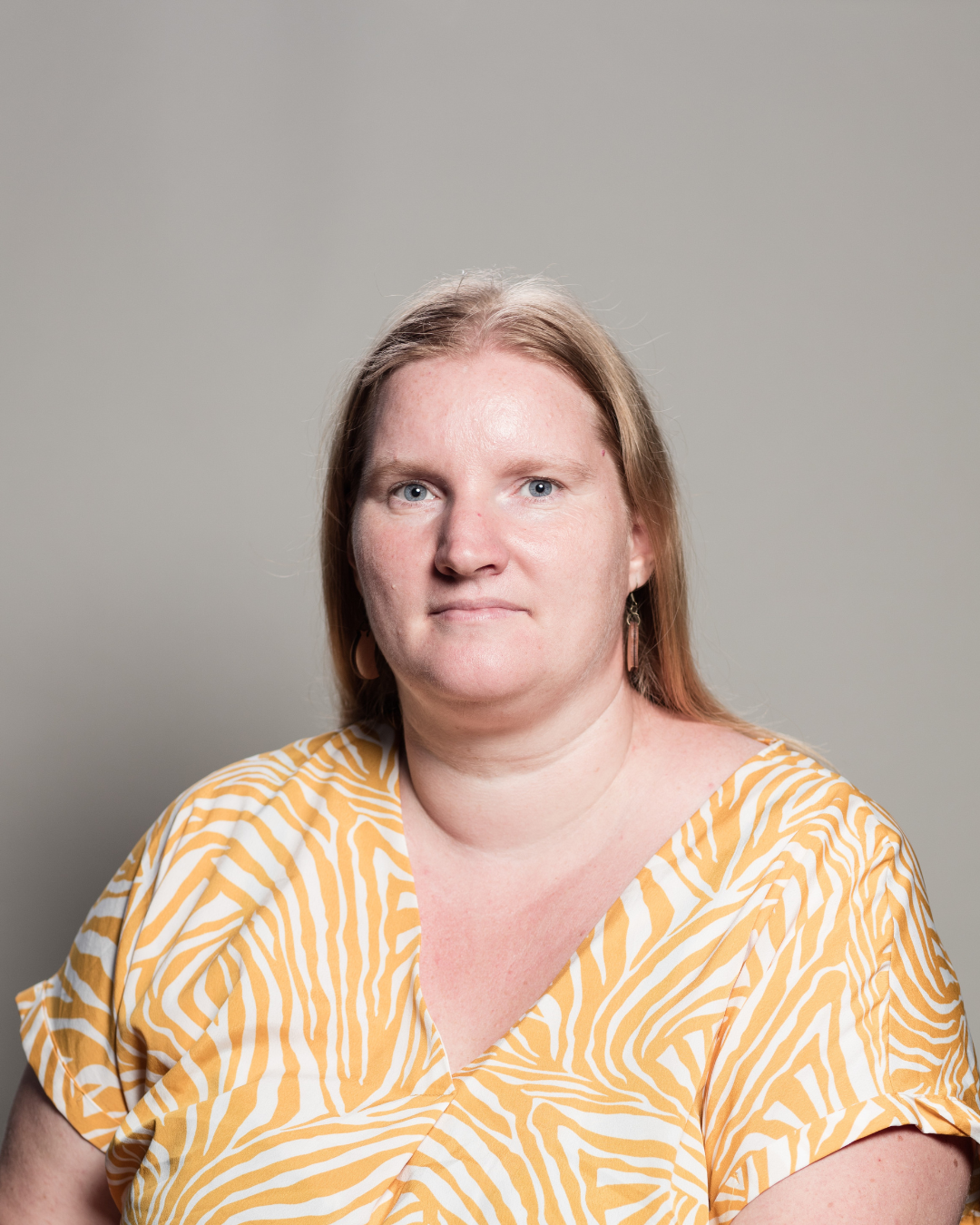
Ana Slavec
University of Primorska, Faculty of mathematics, natural sciences and information technologies » Koper, Slovenia