short talk PRESENTATION
From Fragmentation to Coordination: The European Diamond Capacity Hub and the National Capacity Centres
Athina Papadopoulou [OPERAS, Thessaloniki, Greece]
Johan Rooryck [OPERAS, Brussels, Belgium]
Marion Paulhac [OPERAS, Paris, France]
Milica Ševkušić [EIFL, Belgrade, Serbia]
Iryna Kuchma [EIFL, Kyiv, Ukraine]
Karla Avanço [Aix Marseille Université: amU, Marseille, France]
Open scholarly communication is not only shaped by policies, standards, and tools, but fundamentally by the communities that build, maintain, and sustain it. In an increasingly complex and fragmented scholarly communication landscape, communities play a crucial role supporting and promoting community-owned, equitable publishing efforts that enable access to knowledge and provide the model and structure for sustainable open publishing solutions. Central to this effort is the relationship between European-level coordination and local initiatives, which is realised through the National Capacity Centres (NCCs). By acting as the operational link, these centres connect broader institutional frameworks with local communities of practice, ensuring that collective infrastructures remain responsive to the specific needs of regional publishing ecosystems in Europe.
Building on the outputs of the DIAMAS and CRAFT-OA projects, the European Diamond Capacity Hub (EDCH), an ongoing OPERAS programme, is a collective that provides services for Diamond Open Access Publishers, Service Providers, and Tools & Technology Providers. It was created to serve as a central hub fostering alignment, sustainability, and robustness of services and tools supporting Diamond OA publishing across the European landscape. It takes the lead in addressing this fragmentation by offering services, common quality standards, and coordinating the NCCs network that support Diamond OA at the local level. Currently, the network comprises 22 NCCs across 23 European countries, with 14 fully operational centres and 8 currently in development. This growing NCC network illustrates both the potential and the challenges of building shared infrastructure and capacity development programmes across diverse regions. NCCs must operate in different policy and resource availability contexts, are of different levels of maturity, but yet align their approaches to ensure inclusivity, and long-term sustainability of Diamond OA publishing in the European Research Area.
The EDCH facilitates coordination among these NCCs, providing a robust platform for visibility and knowledge exchange, and streamlining services in support of publishers, libraries, service providers, and technology partners across Europe. Together, NCCs strengthen the Diamond OA ecosystem at the local level by offering tailored national, regional, and local support, advocacy, and capacity-building in ways that are responsive to specific national and regional community needs.
In some countries, well-established institutional publishing ecosystems and dedicated funding streams provide a strong foundation for Diamond OA publishing, while in others, initiatives remain emerging, often relying on time-sensitive project-based support or volunteer-driven efforts. This uneven landscape requires NCCs to balance capacity-building with service provision, adapting
their activities to local realities while contributing to shared European objectives and vision via the EDCH.
The development of this network also brings challenges related to governance, resource allocation, and long-term sustainability. Ensuring equitable participation across regions, maintaining consistent levels of service, and securing stable funding beyond project cycles are ongoing challenges.
This presentation highlights the work of the EDCH and its network of NCCs through the lens of community: as a hub of shared practices, collective governance, and distributed responsibility and ownership. NCCs are not only service providers but also facilitators of communities of practice, enabling dialogue among publishers, infrastructure providers, and all actors of scholarly publishing. They contribute to shaping governance models that are participatory and context-specific, while aligning with broader European and global developments in Diamond OA publishing and Open Science.
The presentation also explores how community-led coordination through the EDCH helps address fragmentation and supports more coherent and resilient Diamond OA ecosystems. It will highlight practical examples of how NCCs foster collaboration, support the adoption of shared standards, and enable knowledge exchange across borders. It will also reflect on key challenges, including aligning local and European priorities, ensuring sustainable funding, and balancing standardisation with diversity.
Building on the important work of the EDCH and recognising the need for stability and long-term support for these collective efforts, the Horizon Europe project AEGIS-OA was recently launched to focus on translating regional coordination into practical implementation for Diamond OA. The AEGIS-OA project expands and operationalises the EDCH services portfolio, with particular attention to improving metadata quality, bibliodiversity, aligning workflows, strengthening funding approaches, and enhancing collaboration across stakeholders. It also broadens the scope of the EDCH to now include Diamond OA books, acknowledging the importance of monographs and edited volumes, especially within the social sciences and humanities.
By focusing on communities as both drivers and stewards of open scholarly communication, and the contribution of the EDCH NCCs network, this presentation offers insights into how shared infrastructures like the EDCH can support more inclusive, participatory, and sustainable models of publishing. It aims to contribute to ongoing discussions on governance, responsibility, and the role of collective action in bridging the gap between Open Science policies and everyday practices.
Community-led Publishing, Diamond OA, Scholarly Publishing
Rooryck, J., & Mounier, P. (2025). D1.4 Short Policy Brief for period 2 (1.0). Zenodo. https://doi.org/10.5281/zenodo.16743083
Mounier, Pierre, and Johan Rooryck. 2025. ‘Federating Diamond OA in Europe and beyond: The European Diamond Capacity Hub (EDCH)’. Insights 38 (1). https://doi.org/10.1629/uksg.683.
Karla Avanço is the capacity building manager of OPERAS. With a PhD in languages and linguistics and more than 10 years of experience in education and training, she reoriented to scholarly communication. Currently she works with the diffusion and adoption of Open Sciences and Open Access practices, especially through the management of the different Special Interest Groups within OPERAS community and the development of the diamond OA model. She has experience in linguistics, training, scientific translation, and academic publication. She is based at OpenEdition in Marseille, France.
Wednesday, 9 September, 15:30-17:00
SESSION 2 Diamond Open Access Publishing and Communities
[short talks]
- From Fragmentation to Coordination: The European Diamond Capacity Hub and the National Capacity Centres (Athina Papadopoulou, Johan Rooryck, Marion Paulhac, Milica Ševkušić, Iryna Kuchma and Karla Avanço)
- Diamond Ireland: from landscape evidence to a community-governed national infrastructure within Europe’s Diamond Open Access network (David Kane, Niamh Brennan, Jane Buggle, Michaela Cooley, Frank Houghton, Johanna Archbold and Kieran Rankin)
- Advancing Editorial Quality through Journal Certification: experiences of one national platform (Ljiljana Jertec Musap, Iva Vidović and Nino Katić)
- Milano University Press: A Long-Standing Commitment to Diamond Open Access from Its Origins (Paola Galimberti, Rossella Filadoro and Andrea Collivignarelli)
[discussion]
[sponsor presentation] → Wolters Kluwer
[poster session]
- The brightness of Spanish diamond journals (Remedios Melero and Olga Elizabeth Moreno-Fleitas)
- The Diamond Program of UiT The Arctic University of Norway (Amalie Ask)
- AEGIS-OA: Advancing Diamond Open Access Publishing in Europe (Athina Papadopoulou, Marion Paulhac, Milica Ševkušić, Iryna Kuchma and Karla Avanço)
- Researchers for Diamond Open Access: Theory vs. Practice (Petra Šarić, Ljerka Ostojić and Edward Legg)
- Croatian Centre for Diamond Open Access: From Community Practice to National Coordination (Ivana Matijević, Anja Majstorović, Drahomira Cupar, Ivana Morić Filipović, Iva Melinščak Zlodi, Irena Kranjec, Iva Grabarić Andonovski, Jadranka Stojanovski, Draženko Celjak and Ljiljana Jertec Musap)
- Embedding Open Access in Institutional Book Publishing Workflows: A Library-Led Diamond Model (Iva Melinščak Zlodi, Irena Kranjec and Ivana Kukić)
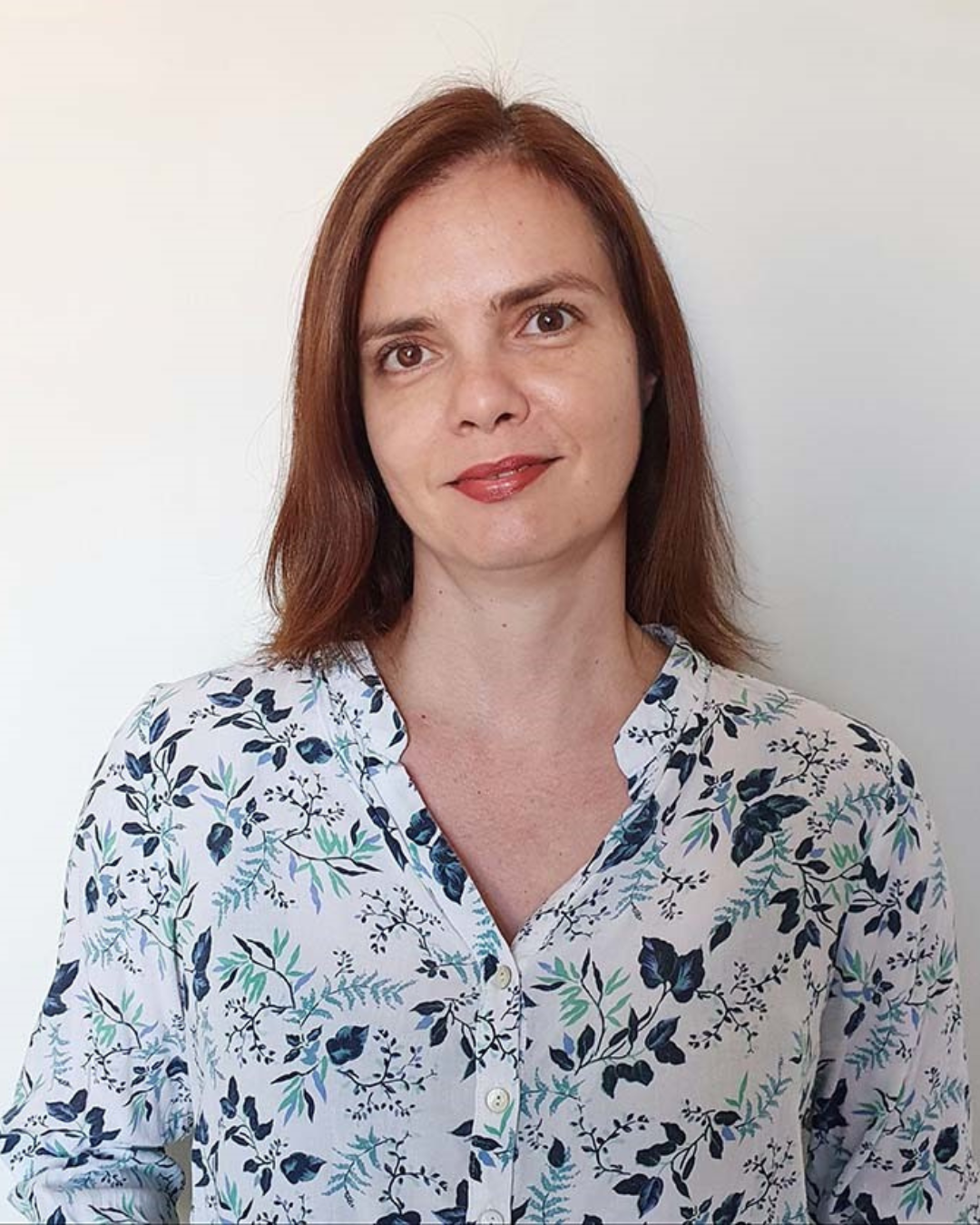
Karla Avanço
Aix Marseille Université: amU » Marseille, France